Small Living Room Lighting Ideas: Warm Layers Without Rewiring
Ditch the single harsh ceiling light. Build a warm, layered scheme of lamps at different heights that makes a small living room feel bigger and calmer.
November 15, 2026 · 6 min read
 AI illustration
If your small living room has one harsh ceiling light and nothing else, you already know the problem. Switch it on and the room looks flat and a little clinical; switch it off and you are squinting at a book. The fix is rarely a better ceiling fixture. It is spreading several soft, low light sources around the room so that no single one has to do all the work.
This is especially useful for renters, who often cannot change the wiring and are stuck with whatever the previous tenant left behind. Everything below works with plug-in lamps, adhesive hooks and a bit of planning. It also suits the warm, natural look this site favors: paper, linen, rattan, ceramic and oak, in glowing cream and amber tones rather than cool white.
Here is how to build a layered scheme in a compact room, what to avoid, and how to do it on a budget.
Think in three layers, not one fixture
Designers usually talk about ambient, task and accent light. In a small living room, that translates to something simple:
- Ambient: the general glow that lets you walk around comfortably. This can come from a floor lamp bounced off the ceiling, a paper lantern, or a ceiling fixture on a dimmer.
- Task: focused light where you read, knit or work. A swing-arm lamp beside the sofa or a small table lamp on a side table does the job.
- Accent: low, decorative light that adds depth, such as a lamp on a shelf, a small ceramic lamp on a console, or a string of warm bulbs behind a plant.
A good target for a small room is three to five light sources at different heights. Two at eye level or below, one lower than that, and one higher up. The mix of heights is what makes a room feel layered instead of lit.
Start with one great floor lamp
If you only buy one thing, make it a floor lamp. It takes up a few square inches of floor but lights a whole corner, and it can replace the overhead light for most of the evening.
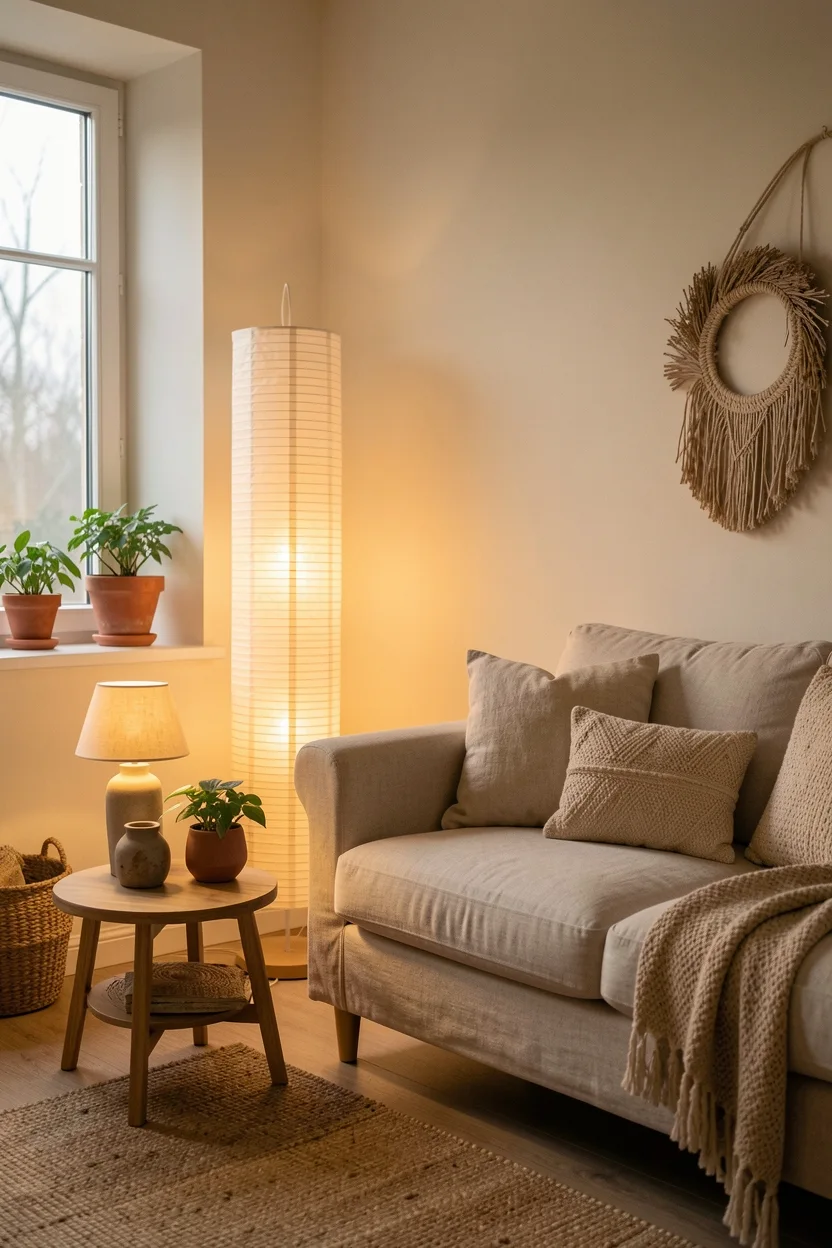
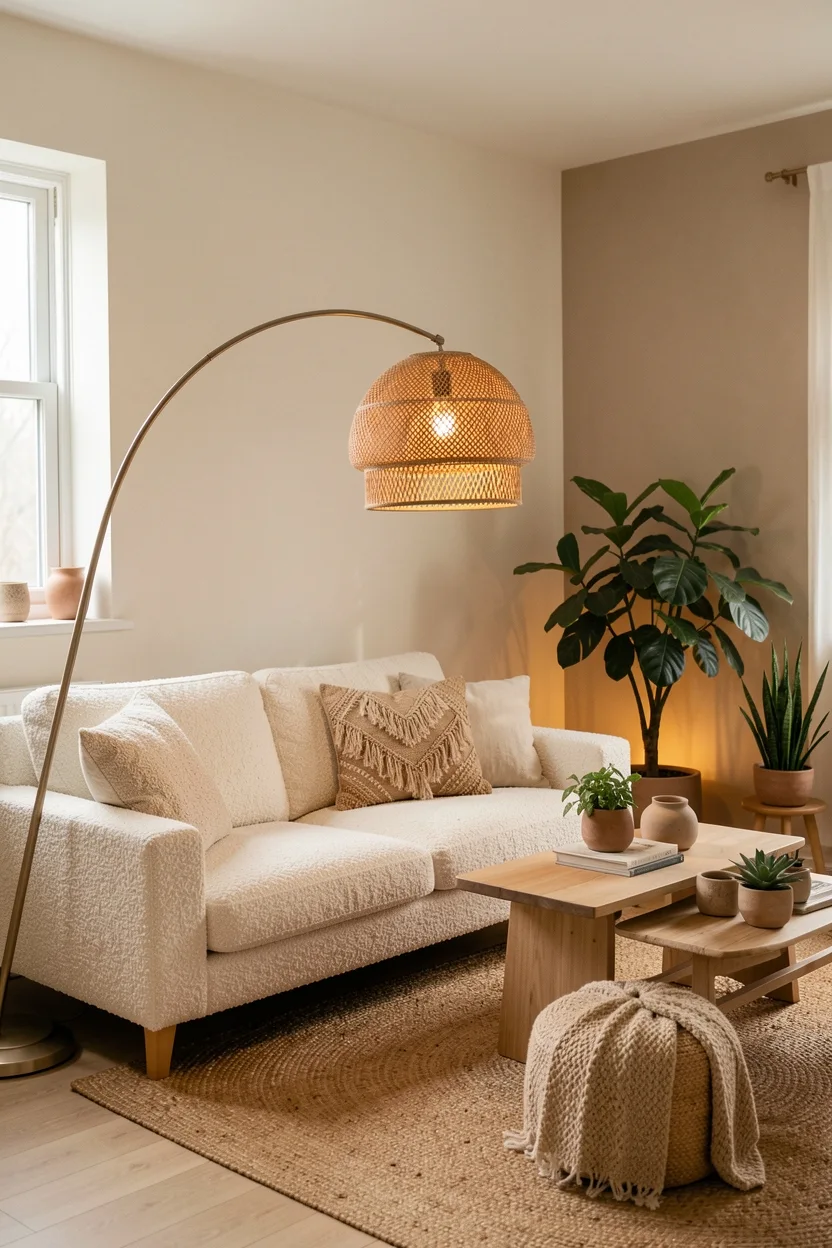
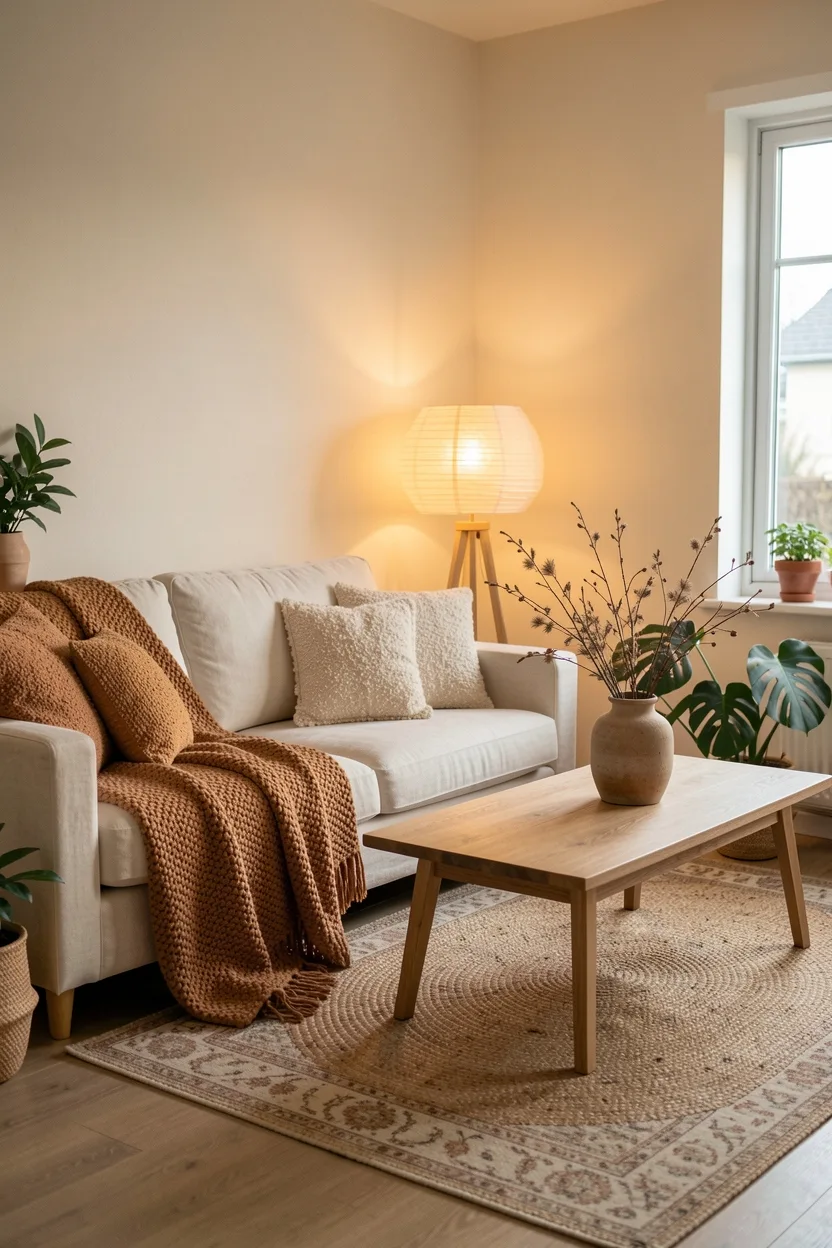
Good choices for a warm, Japandi-leaning room include a paper or rice-paper lantern on a slim stand, an arc lamp that leans over the sofa, or a lamp with a linen drum shade. Arc lamps are handy when you have no space for a side table because they reach over the seating from behind.
Place it in a corner behind or beside the seating. Corners are where small rooms feel darkest, and lighting them pushes the walls visually outward.
Choose warm bulbs and keep them consistent
The shade is half the story; the bulb is the other half. Look for bulbs labeled "warm white" or around 2700K. Anything labeled "daylight" or "cool white" will fight the beiges, oak and terracotta in the room and make it feel cold.
Keep every bulb in the room the same color temperature. Mixing a warm lamp with a cool overhead bulb is one of the quickest ways to make a space feel unfinished. If a lamp supports it, a dimmable bulb gives you extra control, and plug-in dimmers or lamps with built-in touch dimming are renter-friendly.
Pick bulbs with a frosted finish or put them behind a shade, so you never see a bare filament glaring at eye level.
Use shades to soften and spread the light
Light-colored, translucent shades such as linen, paper and rice paper diffuse light and make it glow rather than point. Dark or opaque shades push light up and down in two narrow cones, which can make a small room feel tighter.
A few rules of thumb:
- Choose natural, slightly textured materials: linen, woven rattan, paper.
- Keep the shade wide enough that the bulb is hidden when you are sitting down.
- Avoid glossy or metallic finishes, which read cold and add glare.
Add height without using floor space
Small rooms run out of floor long before they run out of wall. Plug-in wall sconces with a cord cover, or a hardwired-looking sconce that plugs into the outlet, add height and give you a bedside-style reading light at the sofa without needing a side table.
If you cannot drill, adhesive hooks can hold a lightweight pendant lantern cord along the wall to a ceiling hook, and a paper lantern can hang from an existing ceiling fixture's bulb socket using a plug-in or socket adapter. Check the weight limits on anything you stick to a wall, and never hang anything heavy from adhesive.
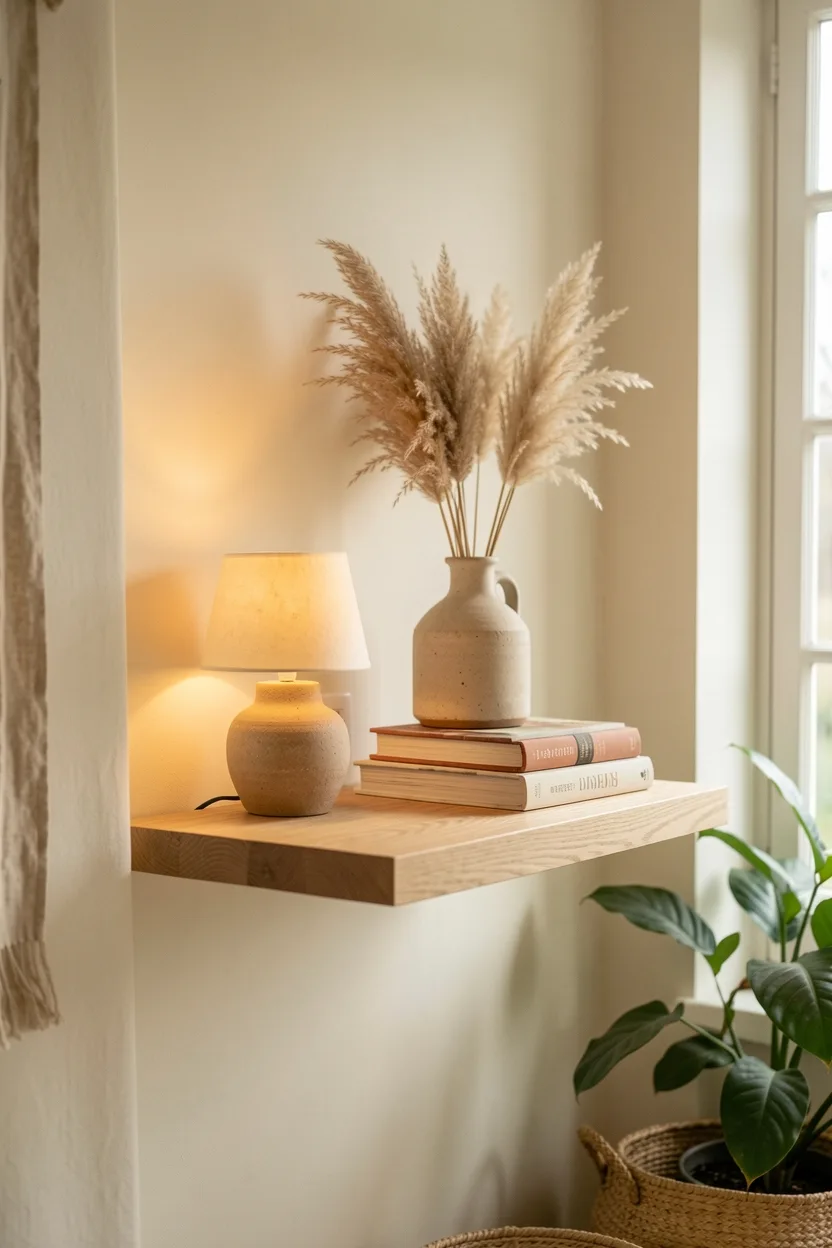
Shelves are another easy spot. A small ceramic lamp on a floating shelf or a slim console creates an accent pool of light without taking up floor.
Light the dark corners and the edges
A small room feels bigger when its edges are lit. Try putting a small lamp or a low uplight behind a plant, a chair or a stack of books on the floor. The light washes up the wall, which adds depth and a soft glow at the room's edges.
Window sills and the tops of bookcases are also good perches for a tiny battery or plug-in lamp. Dark corners are where a room "ends" visually, so brightening them gently makes the room feel larger and calmer.
Common mistakes to avoid
- Relying only on the ceiling light. One overhead source flattens everything. Put it on a dimmer or leave it off in the evening.
- Mixing color temperatures. Match every bulb to the same warm white.
- Placing all lamps at the same height. Vary them: floor, table and shelf.
- Oversized lamps. A huge lamp on a small side table crowds the room. Choose slim bases and smaller shades.
- Cord clutter. Visible tangled cords undo the calm look. Use cord clips, run cords along baseboards and tuck them behind furniture.
- Skipping the reading light. Soft ambient light is lovely, but you still need a focused source where you actually read.
Budget-friendly swaps
You do not need designer fixtures to get this look.
- Use a plain paper lantern shade over a basic bulb for an instant glow.
- Swap an ordinary lampshade for a linen or woven one; shades are often inexpensive and change the whole mood.
- Buy warm, dimmable bulbs for the lamps you already own before buying anything else.
- Look secondhand for ceramic lamp bases, then pair them with a new natural-fiber shade.
- Add a plug-in dimmer to an existing lamp rather than replacing it.
For more on how warm light works with a neutral palette, see our guide to cozy winter living room ideas in warm neutrals. You can also browse everything in our lighting category or the living room category for more layouts.
A simple evening setup to copy
If you want a formula, try this: overhead light off, one tall paper-shade floor lamp in the corner behind the sofa, one small ceramic lamp on a side table or shelf, and one tiny accent lamp tucked behind a plant. Use warm bulbs throughout. Switch them on about an hour before you sit down for the evening, and the room settles into a soft, even glow without a single bright spot.
FAQ
How many lights does a small living room need? Three to five light sources at different heights is a good range. That might be a floor lamp, a table lamp, an accent lamp and an optional dimmed ceiling light.
What color temperature is best for a cozy living room? Warm white, around 2700K, suits cozy rooms. Keep all bulbs the same temperature so the light looks consistent.
Can I layer lighting as a renter? Yes. Floor lamps, table lamps, plug-in sconces, plug-in dimmers and adhesive-hook solutions all work without drilling or rewiring.
Do I need a dimmer? Not strictly, but dimming makes the room much more flexible. Lamps with touch dimming or inexpensive plug-in dimmers are an easy route.
Good lighting is the quickest way to make a small living room feel considered. Start with one floor lamp and warm bulbs, add a lower accent light, and let the overhead fixture rest. The room will feel bigger, softer and far more inviting after dark.
 AI illustration
 AI illustration
Keep exploring
Bedroom
Small Japandi Bedroom Ideas for Renters: Calm, Warm, No Drilling
How to give a small rented bedroom a calm, warm Japandi look with low furniture, layered textiles and soft light, without painting or drilling.
Living Room
Cozy Winter Living Room Ideas in Warm Neutrals
Layered light, honest textures and one irresistible corner: how to make a neutral living room the warmest room in the house this winter.