Small Japandi Bedroom Ideas for Renters: Calm, Warm, No Drilling
How to give a small rented bedroom a calm, warm Japandi look with low furniture, layered textiles and soft light, without painting or drilling.
November 14, 2026 · 7 min read
 AI illustration
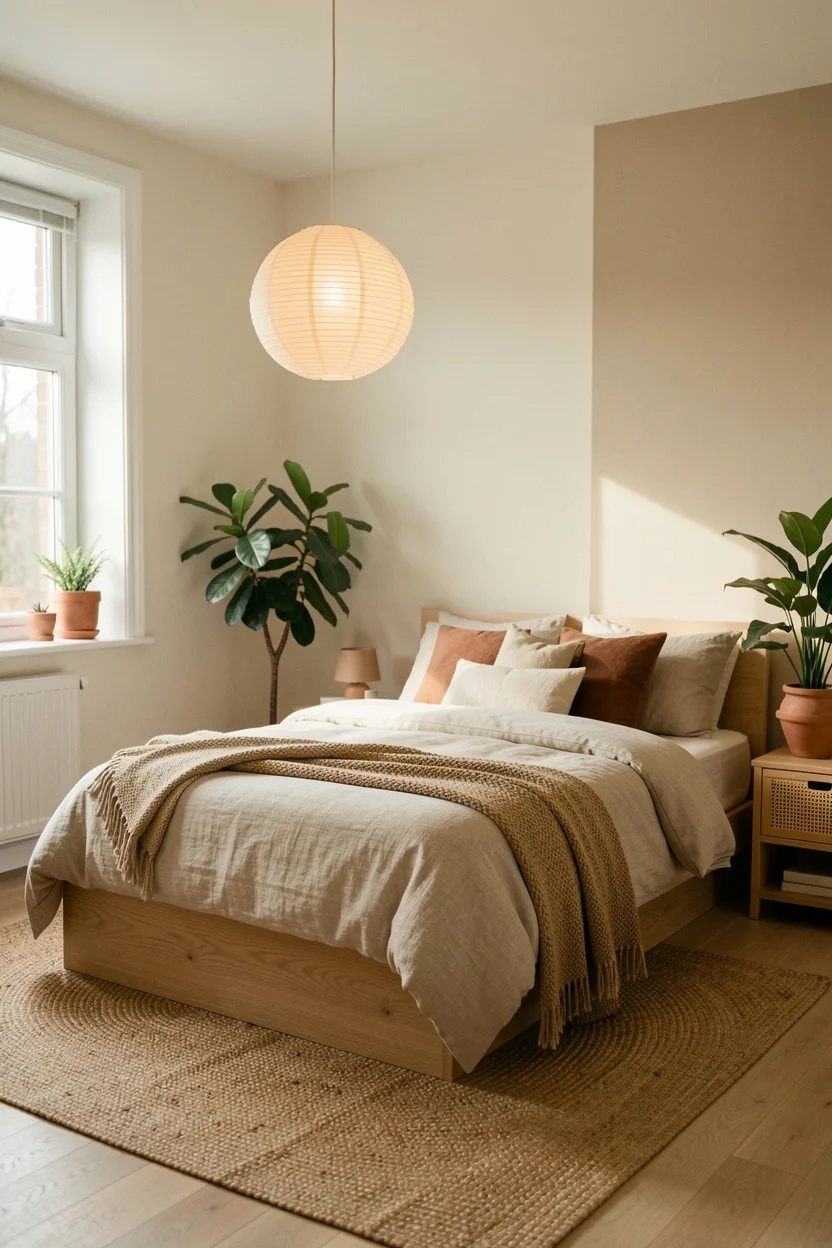
A small bedroom has one job: help you fall asleep and wake up without feeling crowded. The Japandi approach suits that job well, because it borrows the calm restraint of Japanese design and the warmth of Scandinavian coziness. The trick is that "minimal" should never mean "empty." A bare room with a grey duvet feels like a waiting room. A small room with low furniture, warm wood, layered linen and soft light feels like a retreat.
If you rent, there is another layer to think about: you probably cannot paint, drill into every wall or swap the flooring. The good news is that most of what makes a Japandi bedroom work is movable, removable or simply a matter of what you choose to leave out.
Below are the principles and the specific moves that make the biggest difference in a small bedroom, along with the mistakes that tend to undo them.
Start with a warm, quiet palette
Japandi relies on a narrow range of colors so the eye can rest. For a small bedroom, stay with cream, oatmeal, soft beige, warm brown and one muted accent such as olive or terracotta. Keep the walls and the largest textiles (bedding, curtains, rug) in the lightest tones, then use darker wood or clay tones in small doses.
Avoid cool greys and stark white. In a bedroom with limited daylight they read flat and slightly cold, which is the opposite of the feeling you want at night. If your landlord's walls are a pure bright white, soften them with warm-toned curtains and a cream or oatmeal bedspread rather than repainting.
A simple rule: pick three neutrals, one wood tone and one accent color. If an object does not fit that list, it probably does not belong in the room.
Choose low furniture to open up the room
Low furniture is one of the clearest Japandi signatures, and it helps small rooms for a practical reason: the lower the furniture, the more wall you can see, and the taller the ceiling feels.
- Bed frame: a low platform frame in light oak or ash looks calmer than a tall upholstered bed with a big headboard. If you cannot replace your frame, remove a bulky headboard or hide a tall base with a long linen bed skirt in a neutral tone.
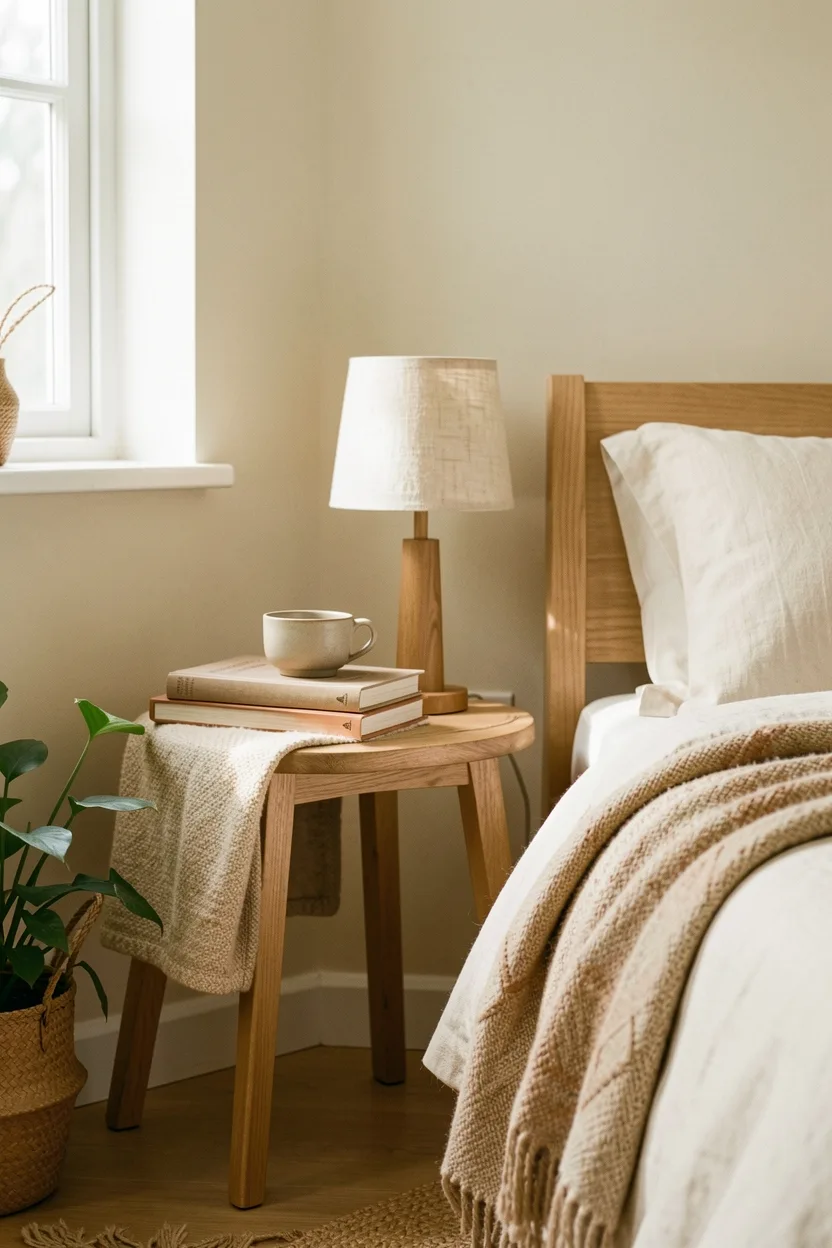
- Nightstands: a small stool, a slim wooden bench or a floating shelf can replace a bulky bedside table. You only need space for a glass of water, a book and a light.
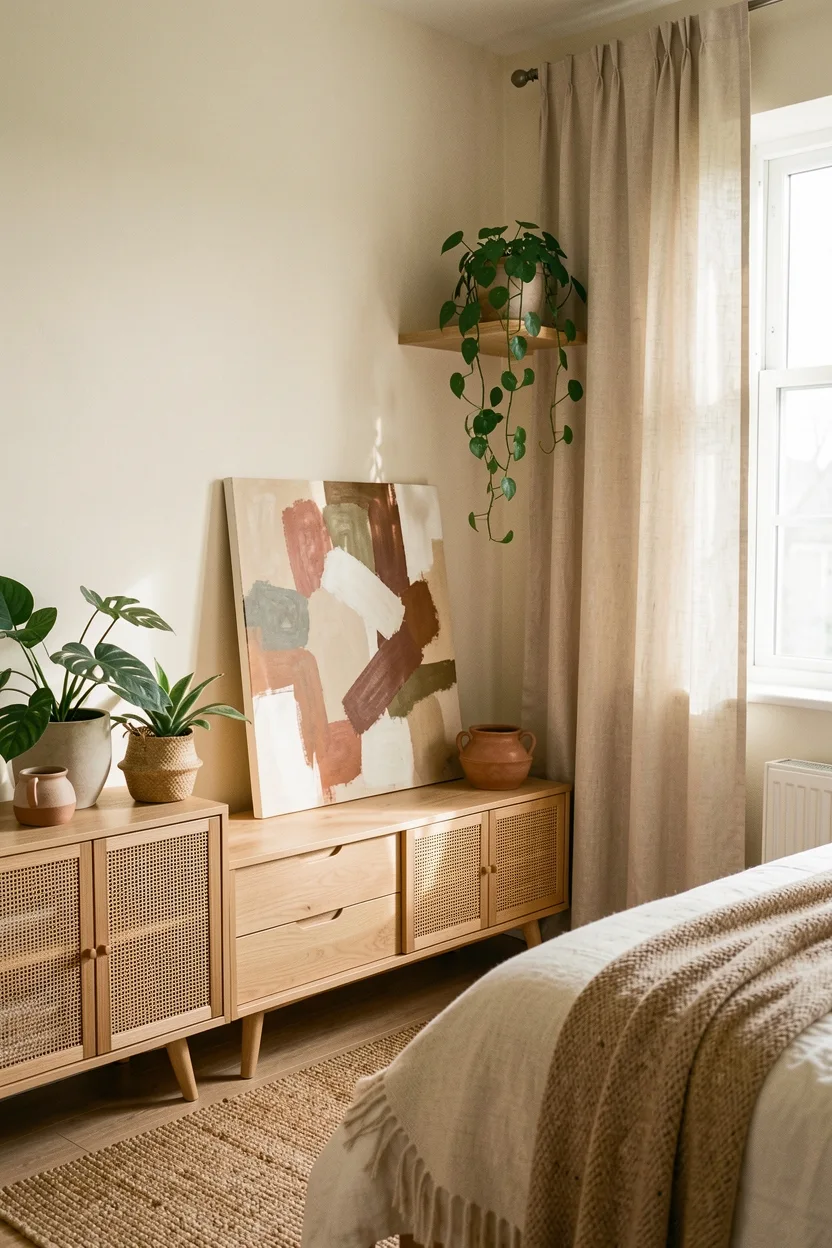
- Dresser: choose one low piece rather than two tall ones, and keep the top mostly clear apart from a tray and a single vase.
When you can, leave a clear gap between pieces. In a small room, the negative space between objects is part of the design, not wasted space.
Layer textiles for warmth, not clutter
This is where the "Scandinavian" half of Japandi earns its place. Texture keeps a minimal room from looking stark, and textiles are the easiest changes for a renter because nothing is permanent.
- Bedding: washed linen or soft cotton in oatmeal or cream, with one extra layer such as a wool or chunky knit throw folded at the foot of the bed.
- Rug: a natural jute or wool rug that extends beyond the sides of the bed so your feet land on something soft. A rug that is too small makes the room feel chopped up. Pull the rug so at least the lower two thirds of the bed sit on it.
- Curtains: floor-length linen curtains hung close to the ceiling make the window and the room feel taller. Choose a light, slightly sheer weight so daylight stays soft.
- Cushions: two or three at most, in solid colors or very subtle texture. Skip busy patterns, which fight the calm effect.
If the room already feels busy, remove one layer before adding another. Three textures usually feel cozy; seven feel messy.
For more ideas on pulling a warm neutral scheme together, see our cozy winter living room ideas in warm neutrals, which uses the same palette and layering logic and translates easily to a bedroom.
Light the room in layers
Lighting does more to change how a small bedroom feels at night than almost any other choice. One bright overhead fixture flattens everything. Japandi rooms use several soft, low sources instead.
- Paper or rice-paper shades: a large paper pendant or a floor lantern diffuses light into a gentle glow. If you cannot change the ceiling fixture, swap the shade for a paper or linen one where the fixture allows it, or add a plug-in floor lantern in a corner.
- Plug-in wall lights: these free up your bedside surface and give you reading light without hardwiring anything. They are a good renter solution, though check how the cord will be managed so it stays tidy.
- Warm bulbs: choose a warm white color temperature so the room glows rather than glares.
Aim for at least two light sources at different heights, both dimmable or easy to switch off from the bed. Browse more options in our lighting category.
Use the walls without damaging them
Wall decor in a Japandi bedroom is sparse and intentional. One large piece usually looks better than a grid of small frames, which can feel busy in a compact room.
- Lean an oversized piece of abstract or botanical art against the wall on a dresser or the floor. It needs no nails and can move with you.
- Use removable adhesive hooks for lightweight items such as a woven wall hanging or a dried stem arrangement, following the weight limit on the packaging.
- If you want a statement, try a headboard-width piece of linen fabric or a simple wood slat panel that leans or hangs from the existing hooks, rather than something that needs drilling.
Leave some wall empty on purpose. The blank space is what makes the few things you do display feel considered.
Make storage invisible
Clutter is the fastest way to lose the Japandi feeling. In a small bedroom, storage has to do the quiet work so surfaces can stay clear.
- Use woven baskets with lids for extra bedding, laundry or off-season clothing.
- Use the space under the bed with low, flat boxes in natural fiber or light wood.
- Hang a row of simple wooden pegs or a freestanding clothes rail in a corner, then keep it edited so it looks intentional.
- Keep the top of the dresser to a tray, one lamp or vase, and nothing else.
A quick test: if you can see more than five separate objects on a surface from the doorway, edit it down. For more compact-room strategies, our small spaces category has related ideas.
Bring in one or two plants
Greenery adds life and a touch of green that sits comfortably with the beige and wood palette. In a small room, one or two plants is enough. A trailing plant on a high shelf draws the eye upward, while a single leafy plant in a ceramic or clay pot can anchor a corner.
Choose plants that tolerate your light. A low-light bedroom suits sturdy, forgiving plants. If you do not get enough light, a good-quality faux olive branch or dried stems in a stoneware vase give a similar softness without the upkeep.
Common mistakes to avoid
- Too many small accessories. Many tiny objects read as clutter. Group items in threes or fewer and let them breathe.
- A rug that is too small. It breaks the room into pieces and makes it look smaller.
- Cold lighting. Bright cool bulbs undo the warmth of every other choice.
- Matching everything. A matching furniture set looks showroom-flat. Mix a few wood tones and textures for depth.
- Ignoring the ceiling. Hanging curtains high and drawing the eye up with a pendant or plant helps the room feel taller.
- Buying everything at once. Build the room in stages: bedding and rug first, then lighting, then small decor.
Budget-friendly swaps
You do not need new furniture to get the look. Start with the changes that cost the least and make the most difference: swap cool-toned bedding for oatmeal or cream linen, replace a harsh bulb with a warm one, declutter every surface, and add a single natural-fiber rug. After that, look for secondhand low wooden benches or stools to use as nightstands, and thrifted ceramic vases or baskets for storage and decor. Natural materials age well, so older wood and woven pieces often look better than new.
FAQ
Can a Japandi bedroom work in a very small room? Yes. The style is built on restraint, low furniture and open space, which are exactly what a small room needs. Focus on a low bed, a limited palette and clear surfaces.
How do I get the look as a renter? Prioritize movable items: textiles, rugs, lamps, leaning art and freestanding storage. Use removable hooks for anything light, and check your lease before hanging anything or painting.
What colors should I use? Cream, oatmeal, beige and warm brown, with one muted accent such as olive or terracotta. Avoid cool greys and stark whites, which can feel cold in a small room.
How many decor pieces are enough? Fewer than you think. One large piece of art, a plant or two, and a couple of ceramic or woven accents are usually plenty.
A small Japandi bedroom comes down to a handful of calm decisions: warm neutrals, low furniture, layered natural textures, soft light and clear surfaces. Start with one change this week, such as a warmer bulb or a decluttered nightstand, and let the room build gradually from there.
 AI illustration
 AI illustration